








Contracts · Companion plan
Send a contract and get it signed, without a separate e-signature tool
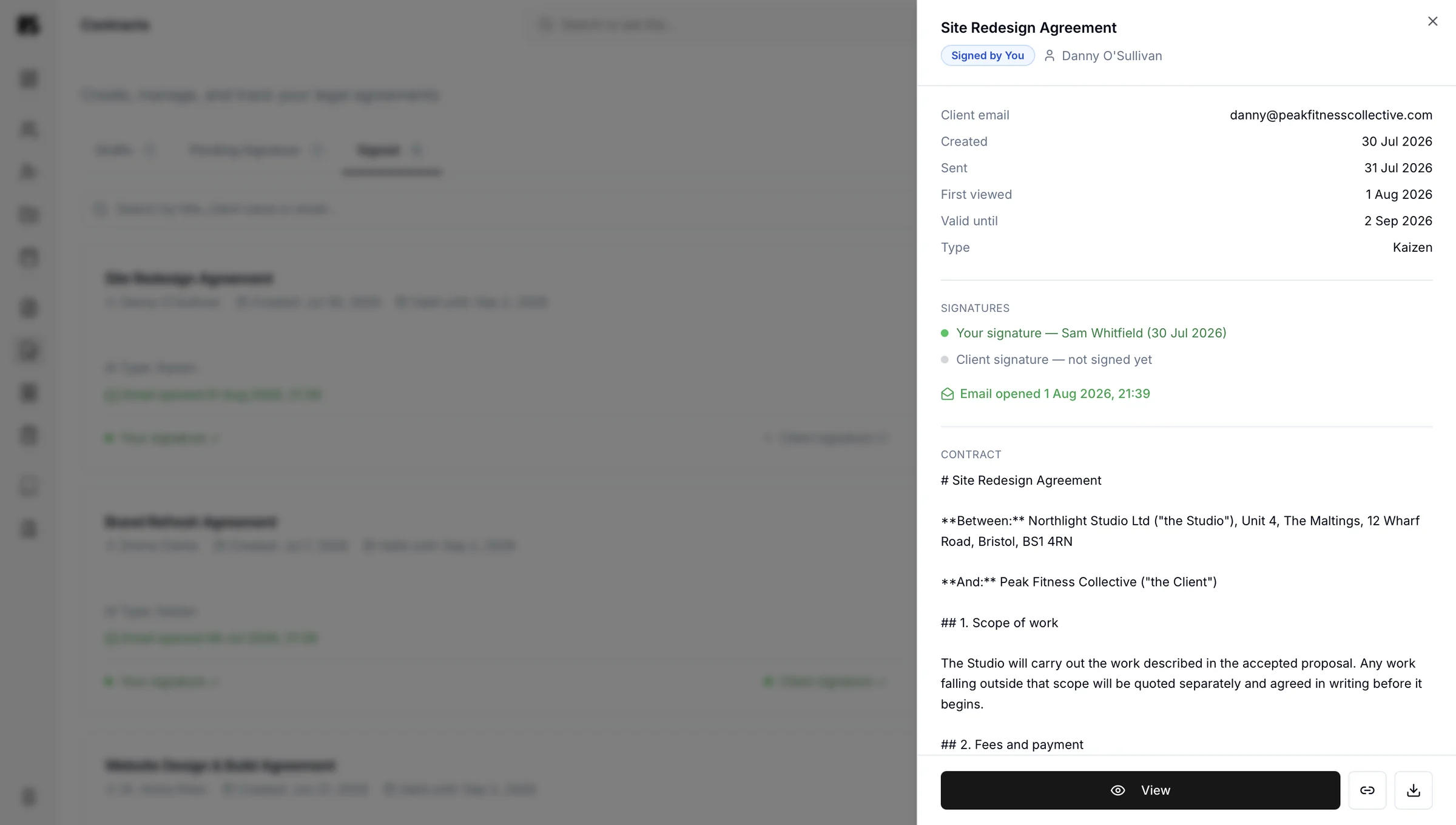
Kaizen lets you send contracts for signature and tracks them until they come back signed. The signed contract stays attached to the client and the project it belongs to, so you can find it in eight months when you need it.

Send it, track it, keep it
Awaiting signature is visibly awaiting signature.
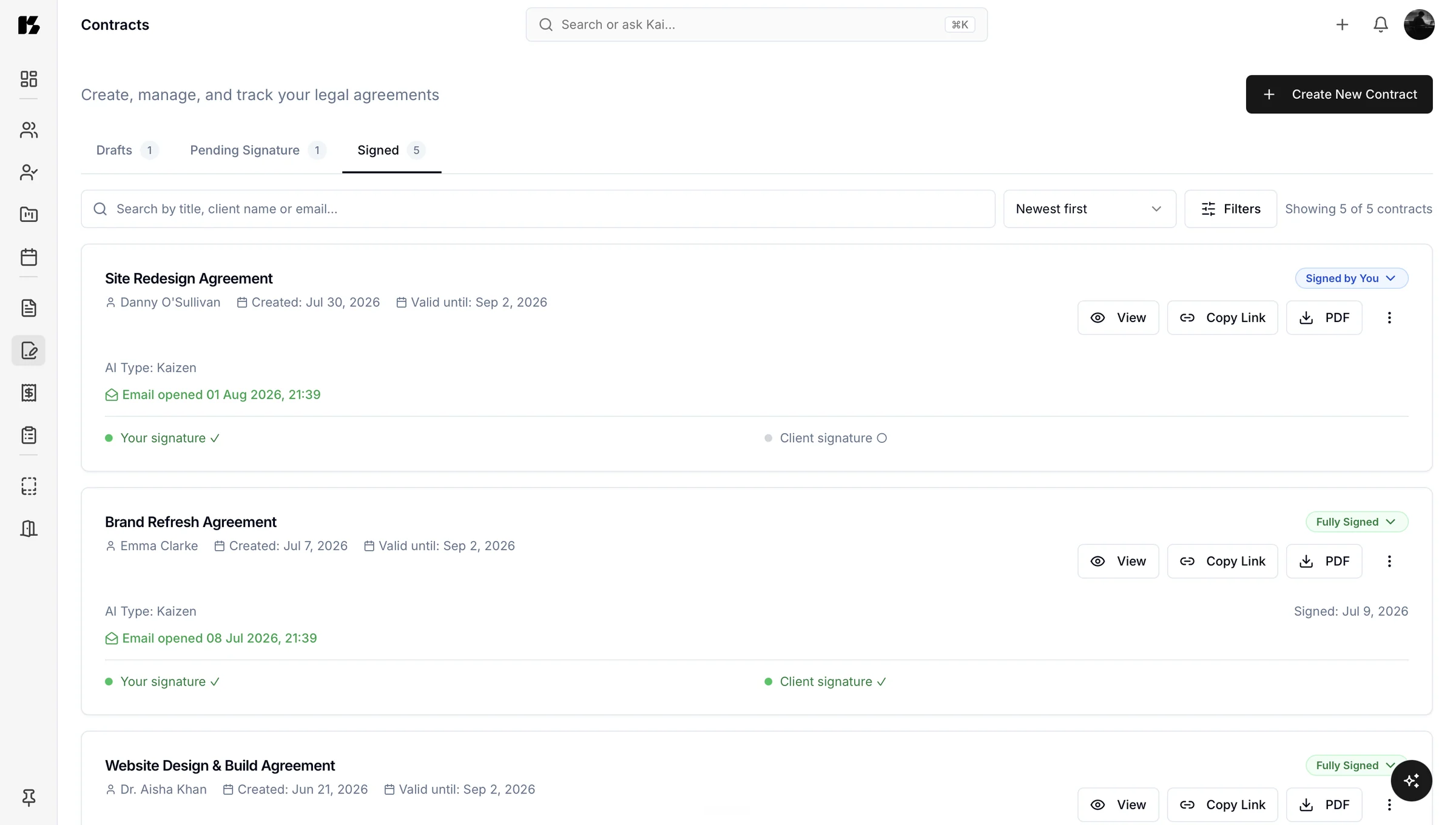
Write or paste your terms, send the contract for signature, and watch its status rather than guessing.
When it comes back signed, it stays with the client record and the project. It sits next to the proposal it came from and the invoices that followed it, which is exactly the order you will want them in if you ever have to reconstruct what happened.
Nothing extra to set up
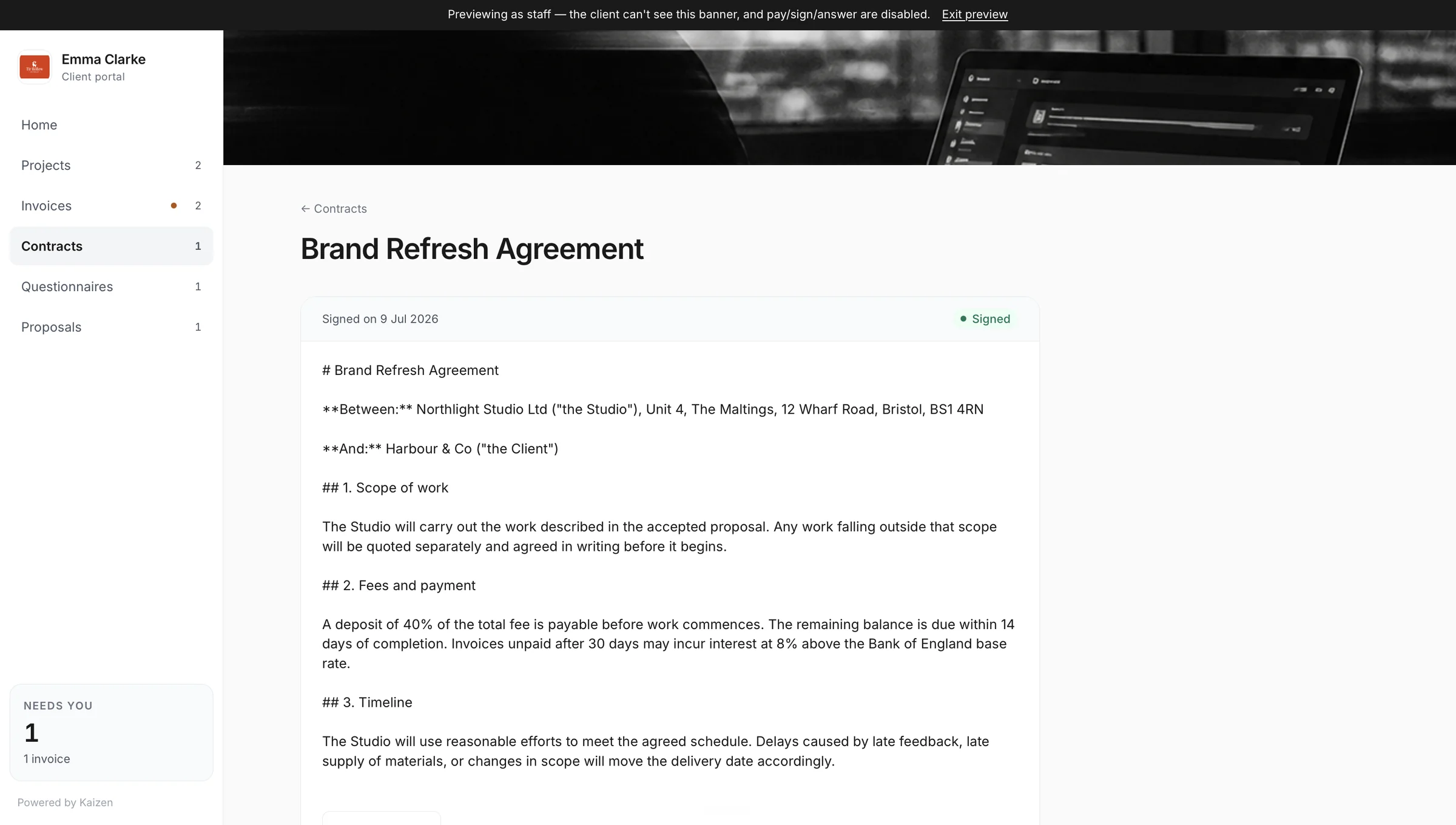
Your client signs from their portal, nothing extra to set up
The contract appears in their client portal with the option to view, download and sign it. If they already have their portal open, that is it: no separate account for the contract, no app, no extra password beyond the one they set for the portal itself.
This matters more than it sounds. Every extra step between a client and a signature is a place where the signature does not happen, and the contract sits unsigned while the work starts anyway.
The gap nobody plans for
Most freelancers do the proposal properly and then get vague about the contract.
Not because they do not care, but because the contract lives somewhere else: a template in a folder, a separate e-signature account, an email thread, a PDF called “contract_final(2)”.
So it gets skipped, or it gets sent late, or it gets agreed over email and never actually signed. Then eighteen months later something goes wrong and the only record of what was agreed is a message that says “yeah sounds good.”

A proposal is accepted.
Normally that is followed by a small administrative dead zone: you know you have the work, you have not quite papered it, and you either start unprotected or delay while you sort it out.
With the proposal, contract and invoice in the same place, that dead zone gets very short. Accepted proposal, contract out, contract signed, first invoice raised, work starts.
Worth knowing about contracts and getting paid
A written contract is also where your payment terms live. Under UK guidance the default position is that a customer must pay within 30 days of receiving your invoice or the goods or service, unless you have agreed a different date, and you have the right to charge statutory interest on late commercial payments.
“Unless you have agreed a different date” is the important clause. If you want different terms, they need to be written down somewhere both of you signed. A contract sitting unsigned in a folder does not do that job.
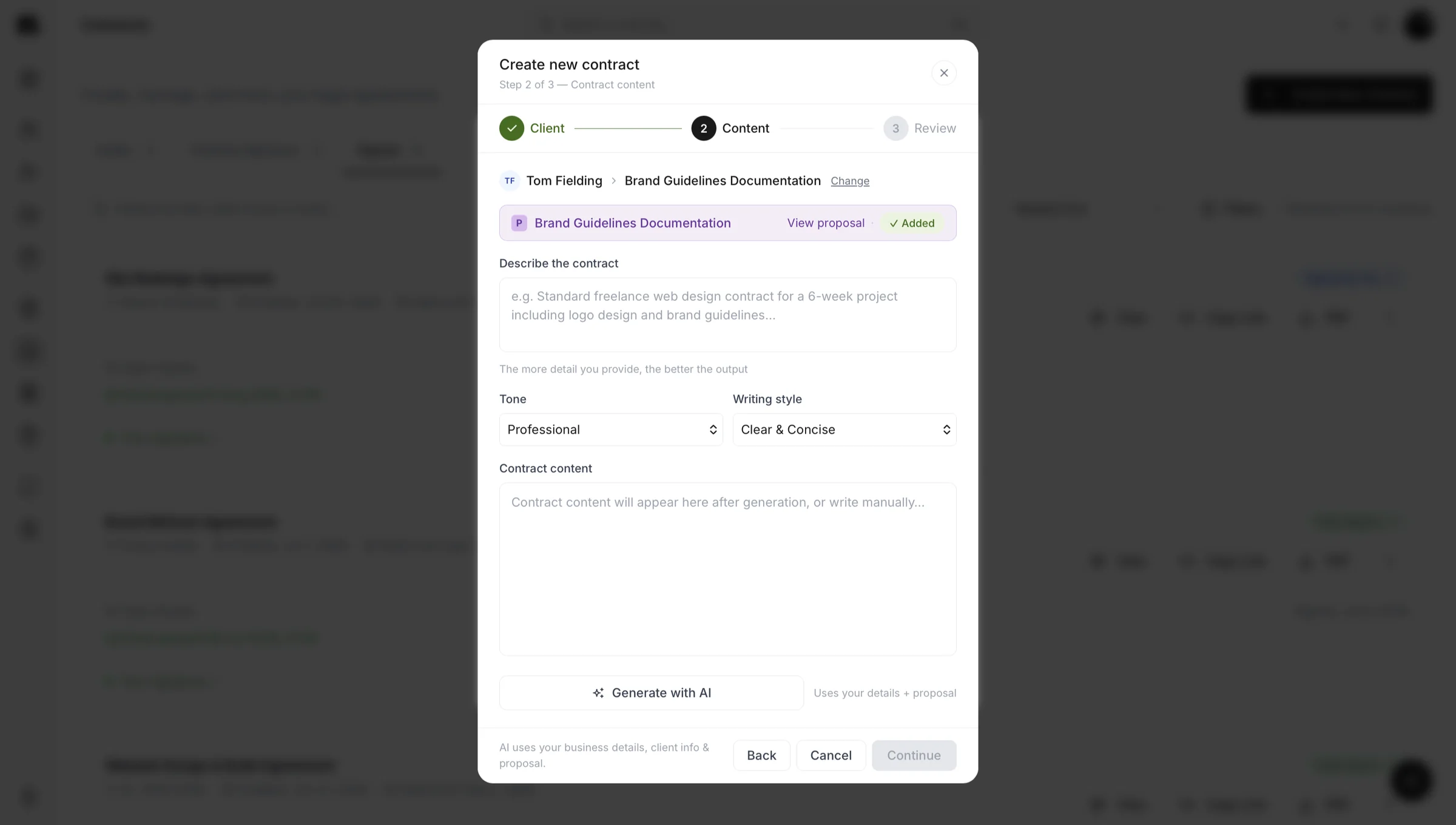
Kaizen is not a law firm and none of this is legal advice. Get your template checked by someone who does that for a living, then use it repeatedly.
Contracts are on the Companion plan, alongside proposals, questionnaires, projects and the client portal.
Contract questions
Yes, you can send contracts for signature from Kaizen and track them until they are signed, without paying for a separate e-signature service. The signed contract stays attached to the client and project it belongs to.
Your client signs from their client portal, which they access with a password they set themselves when the portal was first created. There is no separate account or password just for the contract: they view, download and sign it from the same place they already use for invoices and proposals.
Signed contracts stay on the client record, alongside the proposal they came from and the invoices that followed. Keeping the whole sequence together is what makes it possible to reconstruct what was agreed months later without a search through email.
Yes, payment terms belong in the contract, because the default UK position is that a customer must pay within 30 days of receiving your invoice or the goods or service unless you have agreed a different date. If you want different terms, they need to be written down and agreed. You also have the right to charge statutory interest on late commercial payments.
Kaizen handles sending, signing and storing contracts, but it does not provide legal advice and any template should be checked by a qualified professional before you rely on it. Once you have a template you trust, Kaizen is where you use it repeatedly.
Contracts are included on the Companion plan, not on the free Basic plan.