








Who it's for
Who Kaizen is built for, and what it changes for each of them
Kaizen is built for anyone who does work for other people and has to keep track of it: freelancers, agencies, consultants, small teams and students taking on their first paid work. If you have clients, chase enquiries and raise invoices, you are who this was made for.
Client management, leads and up to 10 invoices a month are free, permanently, which is why the list below stretches all the way down to people who have not billed anyone yet.
The admin problem looks slightly different for each of them, so here is the honest version of each.
Agencies
The multiplication problem
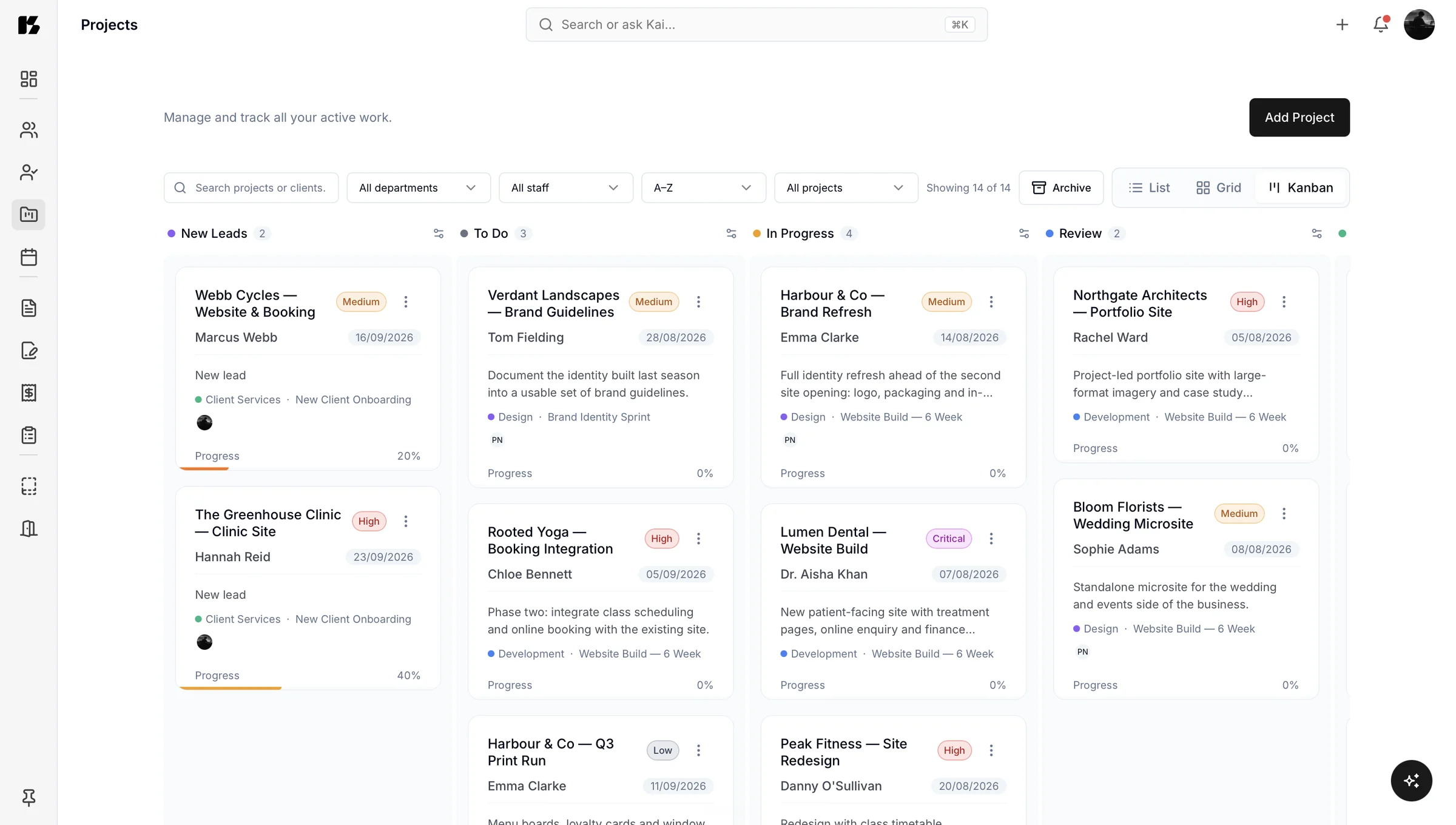
Every client is a project, every project is a set of documents, and every person on the team needs to know where things are without asking someone.
Kaizen gives you one system where every client has a record, every project has its information in one place, and workflow tracking shows real status rather than optimistic status. New team members can find things without a tour.
Kai matters more here than anywhere, because the question “what is happening across all our clients right now?” is one that agencies ask constantly and answer slowly.
Invoicing gets faster, because it stops being a separate job on a separate day. Then the status meeting gets shorter, because everyone can already see where things are.
Freelancers
The everything problem
You are the work, the sales, the admin, the chaser and the person who files things. Every hour spent on admin is an hour that was not billable and was not rest.
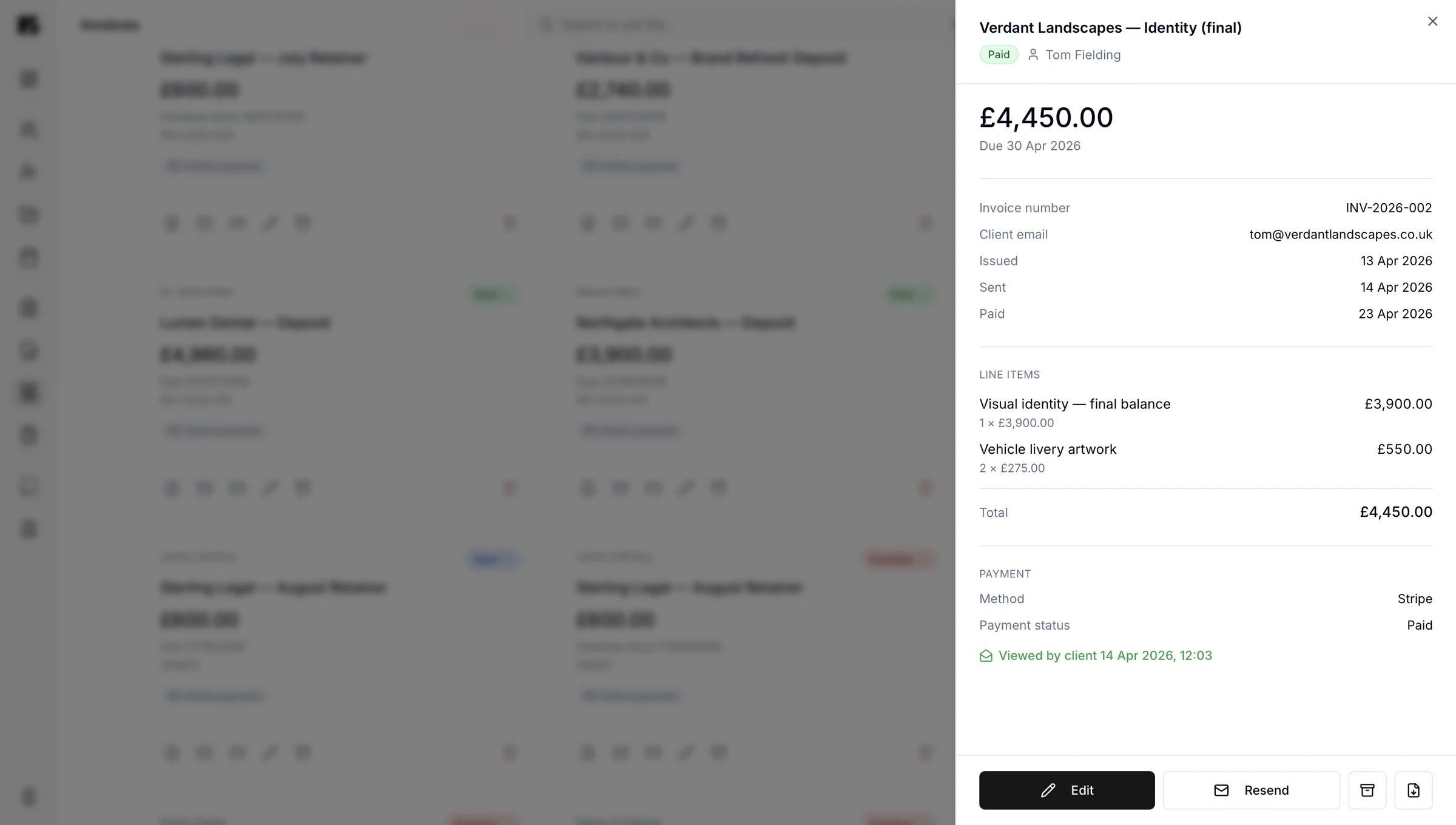
Kaizen is a business-shaped system that does not require an operations person to run it. You get proposals that look like a real company sent them, invoices that go out on time, and onboarding that happens in a form instead of your evenings.
Being paid on time matters disproportionately when you are one person. A majority of UK small firms report dealing with late payments, and the time spent chasing is real money for someone billing their own hours.
Onboarding. One questionnaire replaces a fortnight of “sorry, one more thing.”
Consultants
The credibility problem, in the good sense
You are selling judgement, and how you run the engagement is part of the evidence.
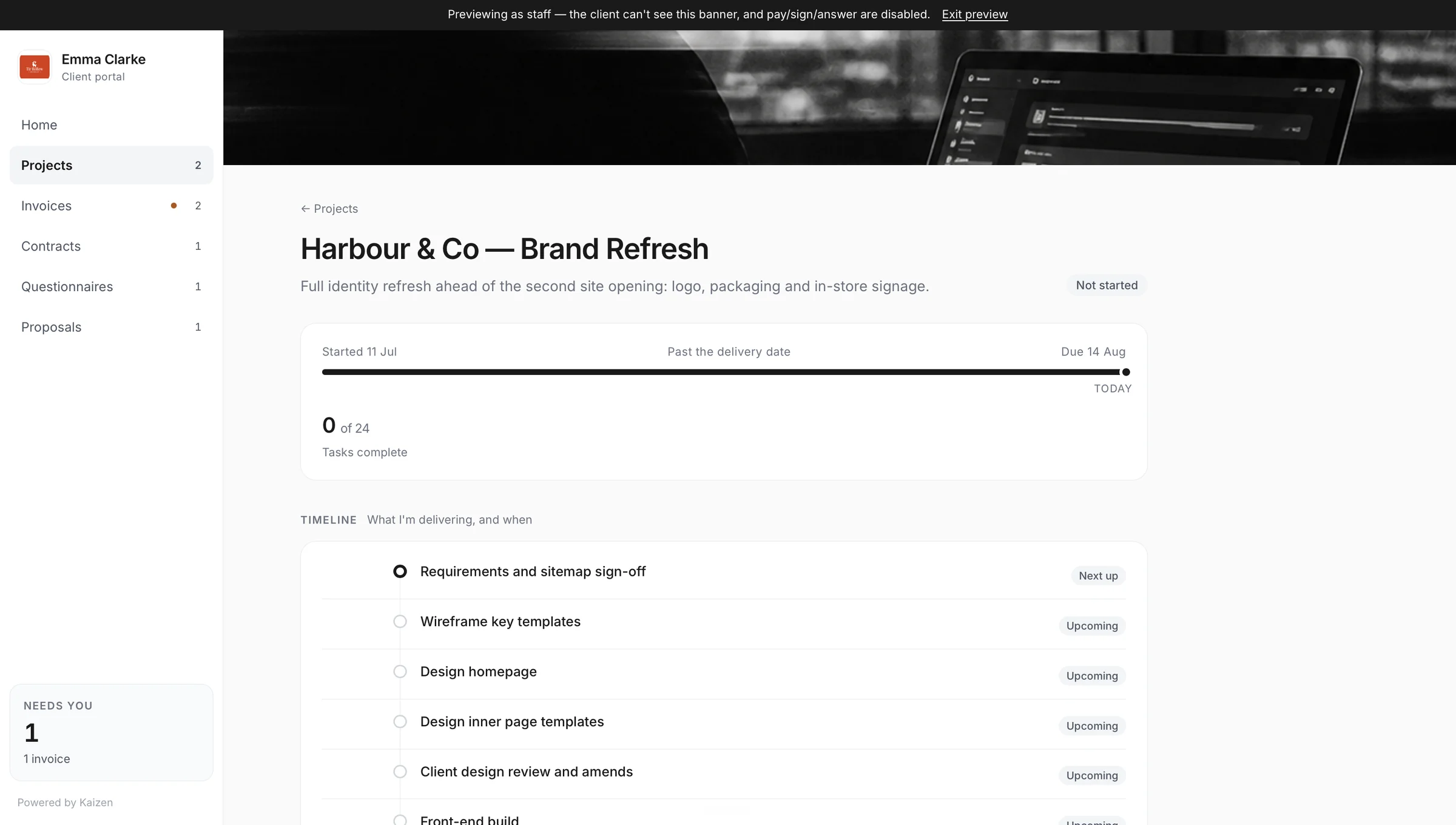
Sending a client a clear, current project list instead of a hastily written status email does quiet work on your behalf. It signals that the person advising them on how to run things can, in fact, run things.
Kaizen also keeps the record straight. Every recommendation, document and update sits with the engagement it belongs to, which matters when work runs long or someone changes role halfway through.
Reporting. Kai can summarise engagement activity on demand, so the update your client asks for takes a sentence to produce.
Service businesses of every other kind. Studios, trades, planners, coaches, photographers, developers, therapists, accountants.
Anyone who takes a client through a process and bills for it. The shape is always the same: enquiry, proposal, onboarding, work, updates, invoice, done.
Kaizen holds that shape without forcing you into someone else's version of it.

Small teams
The outgrown-the-spreadsheet problem
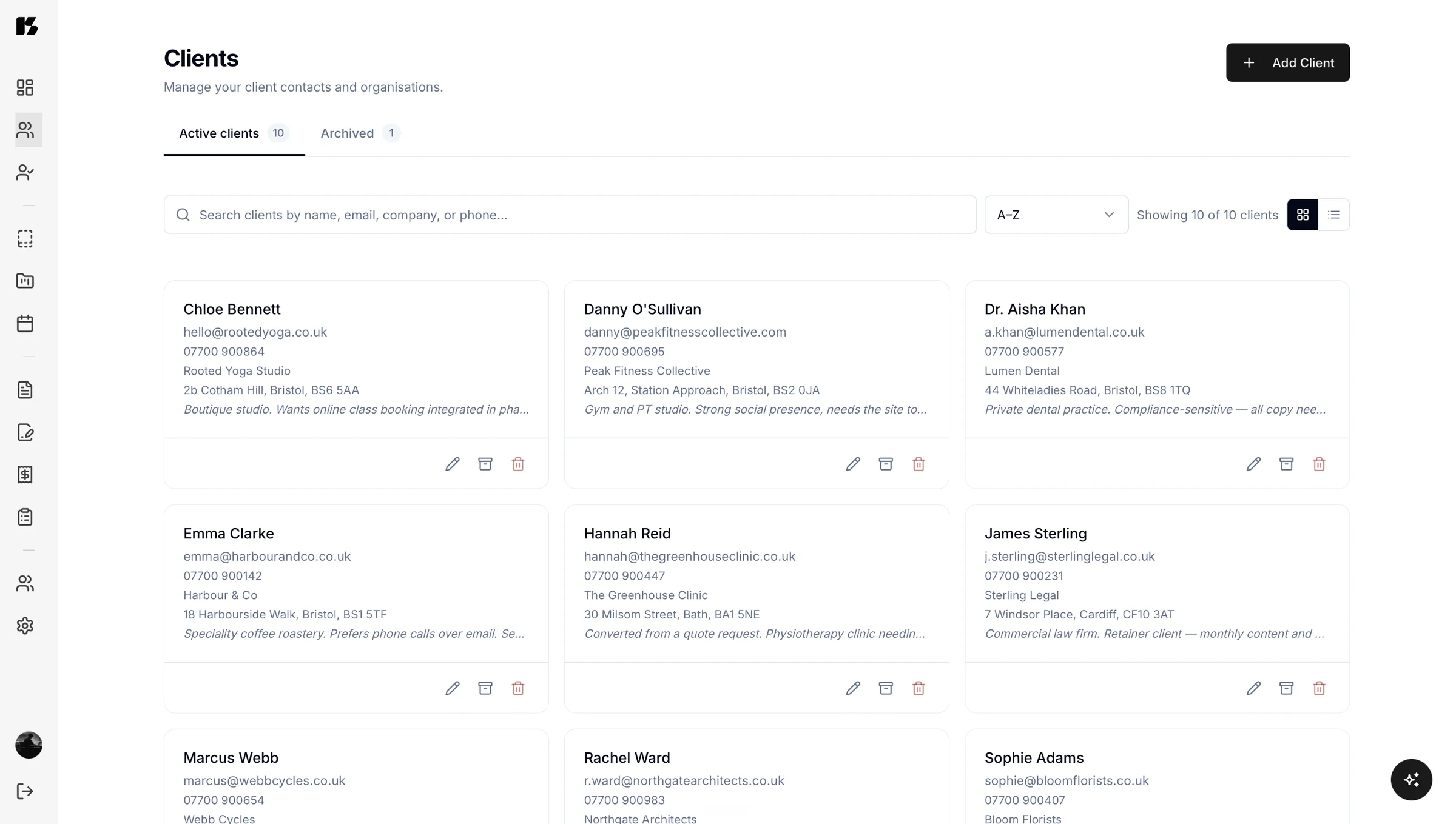
The shared sheet worked when there were two of you. Now there are five, someone has renamed a column, and nobody is certain which version is current.
Kaizen gives you a shared system without the weight of enterprise software. Everyone sees the same clients, the same leads and the same invoices across the whole team.
The daily round of asking colleagues where something is. It just stops.
Students and people starting out
The credibility problem in reverse
The work is good, but the invoice looks like it was made in a word processor, because it was.
The free plan covers this entirely. Add your clients, capture enquiries through a lead form on your Instagram, and send invoices that look like they came from a real business. No card, nothing to cancel.
Getting paid. A proper invoice with clear terms gets taken more seriously than a message asking for a bank transfer.
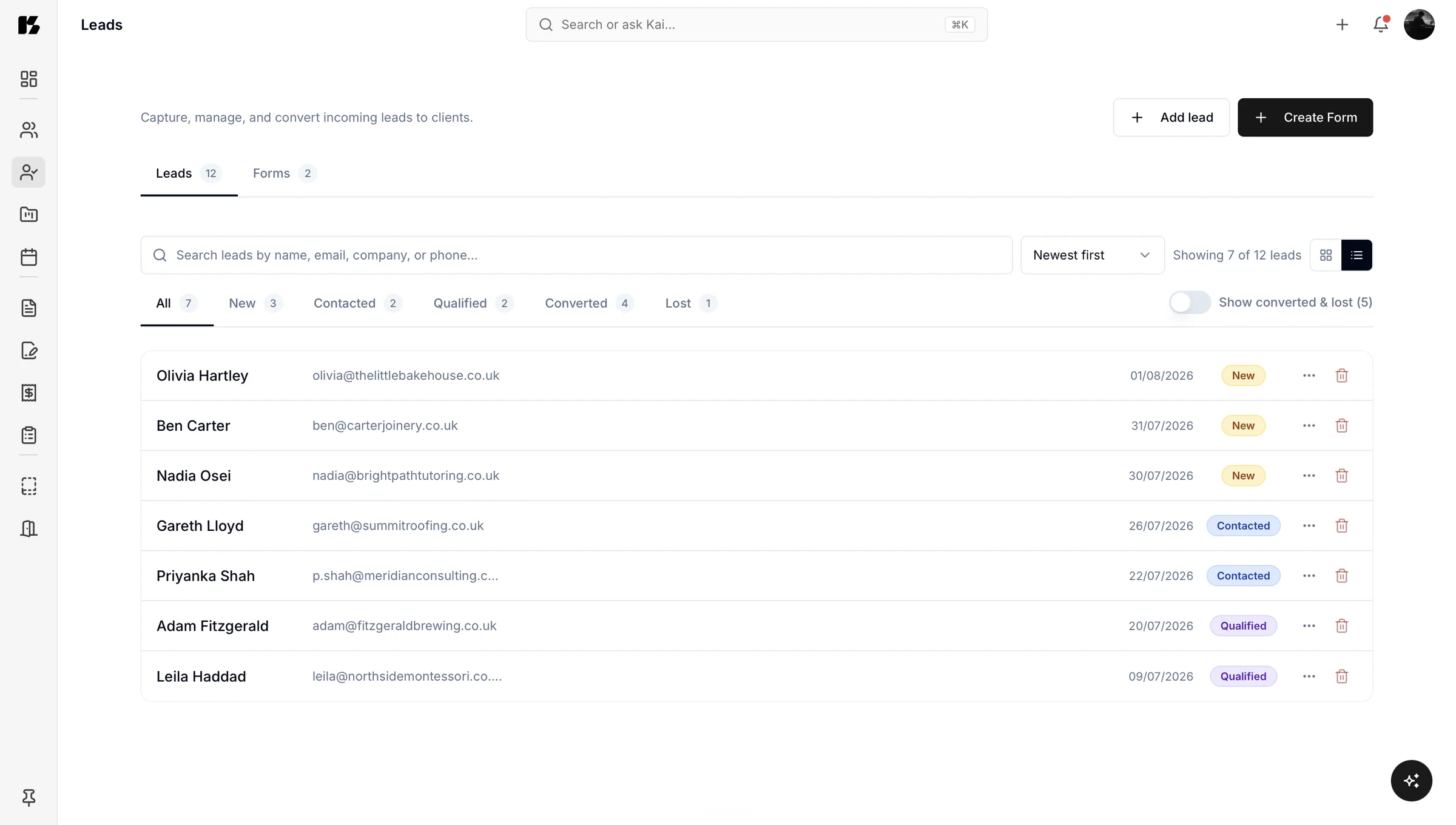
Every enquiry, one list
What they all have in common
Every one of these businesses ends up spending a large share of the week on the connective tissue between apps. Research on task-switching suggests those constant jumps can cost up to 40 per cent of productive time, and nobody has ever billed a client for switching tabs.
One portal removes most of the jumping. Kai removes most of what is left.
- Up to40%
- of productive time can go to task-switching — and every jump between apps is another switch. American Psychological Association
- A majority
- of UK small firms report dealing with late payments, which is its own second job. Federation of Small Businesses
- £3.99
- a month per extra team member, with the first person included in your plan. See the pricing
Questions about fit
The best client management software for agencies and freelancers keeps client records, invoices, proposals and questionnaires connected in one system rather than spread across separate tools. Agencies get shared visibility across every client and project, and freelancers get a professional operation without needing an operations person to run it. Kai closes the remaining gap by creating and updating records on request.
Yes, Kaizen works well for a single freelancer or consultant, and is designed so that running it does not require dedicated admin time. Solo businesses usually feel the benefit fastest, because every hour saved on admin is an hour returned directly to billable work or to your evening.
Yes, teams can work in the same portal with shared visibility of clients, leads, projects, invoices and proposals. The first person is included in your plan, and each extra team member is £3.99 a month. Shared visibility is usually the point for agencies: it removes the daily round of asking colleagues where something is.
Yes, and the free plan is built with this in mind. Client management, lead forms and up to 10 invoices a calendar month cost nothing permanently, with no card required, so you can take on your first paid work and invoice for it properly from day one.
Yes, Kaizen suits any service business that takes clients through a process and bills for it, including studios, coaches, trades, planners, developers and professional advisers. If your work follows the pattern of enquiry, proposal, onboarding, delivery and invoice, the portal will fit around it.